A Selected Bibliography
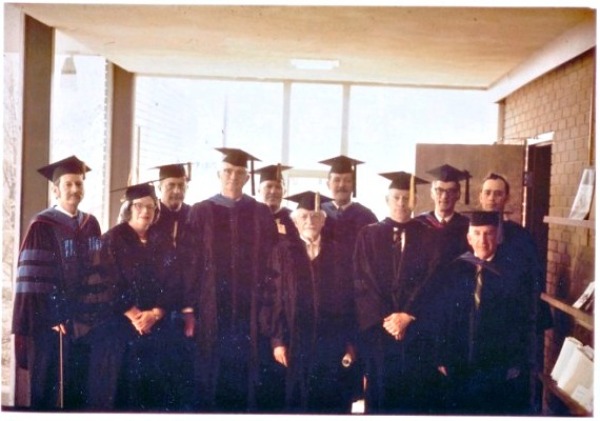
Kantor at Cheiron Society meeting, 1973; from L to R: Sam Campbell, Marion McPherson, unknown, Jerry Carter, Parker Lichtenstein, Kantor, Paul Mountjoy, Irv Wolf, unknown, Arthur Kahn, and Noel Smith (photo courtesy of N. W. Smith)
This is a list of some classic secondary sources on or related to Kantor and interbehaviorism.
Bentley, A. F. (1935). The apprehensional space-segment: Kantor. In Behavior Knowledge Fact (pp. 89-99). Bloomington, IN: Principia Press.
Delprato, D. J. (1979). The interbehavioral alternative to brain-dogma. The Psychological Record, 29, 409-418.
Delprato, D. J. (1980). The reactional biography concept: Early contribution to a perspective for the psychology of aging. Human Development, 23, 314-322.
Delprato, D. J. (1986). Response patterns. In H. W. Reese & L. J. Parrott (Eds.), Behavior science: Philosophical, methodological, and empirical advances (pp. 61-113). Hillsdale, NJ: Erlbaum. (see review by Cone, 1987)
Delprato, D. J. (1987). Developmental interactionism: An integrative framework for behavior therapy. Advances in Behaviour Research and Therapy, 9, 173-205.
Fuller, P. R. (1973). Professors Kantor and Skinner--the "grand alliance" of the 40's. The Psychological Record, 23, 318-324.
Hayes, L. J. (1992). The psychological present. The Behavior Analyst, 15, 139-145.
Hayes, L. J. (1994). Thinking. In S. C. Hayes, L. J. Hayes, M. Sato, & K. Ono (Eds.), Behavior analysis of language and cognition (pp. 149-164). Reno, NV: Context Press.
Hayes, L. J., Ribes, E., & Lopez, F. (Eds). (1994). Psicologia interconductual: Contribuciones en honor a J. R. Kantor. Guadalajara, Mexico: Universidad de Guadalajara.
Hearst, E., & Capshew, J. H. (Eds.). (1988). Psychology at Indiana University: A centennial review and compendium. Bloomington, IN: Indiana University Department of Psychology. (note: see pages 38-39, 42; second ed. available)
Lichtenstein, P. E. (1959). Perspectives in psychology X. Perception and the psychological metasystem. The Psychological Record, 9, 37-44.
Lichtenstein, P. E. (1988). Interbehavioral psychology and Q methodology. Operant Subjectivity, 11, 53-61.
Marr, M. J. (1984). Some reflections on Kantor's (1970) "an analysis of the experimental analysis of behavior (TEAB)." The Behavior Analyst, 7, 189-196.
Midgley, B. D., & Morris, E. K. (1988). The integrated field: An alternative to the behavior-analytic conceptualization of behavioral units. The Psychological Record, 38, 483-500.
Moore, J. (1984). Conceptual contributions of Kantor's interbehavioral psychology. The Behavior Analyst, 7, 183-187.
Morris, E. K. (1982). Some relationships between interbehavioral psychology and radical behaviorism. Behaviorism, 10, 187-216.
Morris, E. K. (1984). Interbehavioral psychology and radical behaviorism: Some similarities and differences. The Behavior Analyst, 7, 197-204.
Morris, E. K. (1992). The aim, progress, and evolution of behavior analysis. The Behavior Analyst, 15, 3-29.
Morris, E. K., Higgins, S. T., & Bickel, W. K. (1982). The influence of Kantor's interbehavioral psychology on behavior analysis. The Behavior Analyst, 5, 158-173.
Mountjoy, P. T. (1976). Science in psychology: J. R. Kantor's field theory. Revista Mexicana de Analisis de la Conducta, 2, 3-21.
Mountjoy, P. T., & Hansor, J. D. (1986). Jacob Robert Kantor (1888-1984). American Psychologist, 41, 1296-1297.
Mountjoy, P. T., & Ruben, D. H. (1984). Extinction and resurgence of scientific history: An interbehavioral analysis. The Psychological Record, 34, 553-566.
Parrott, L. J. (1983). On the differences between Skinner's radical behaviorism and Kantor's interbehaviorism. Revista Mexicana de Analisis de la Conducta, 9, 95-115.
Parrott, L. J. (1984). J. R. Kantor's contributions to psychology and philosophy: A guide to further study. The Behavior Analyst, 7, 169-181.
Parrott, L. J. (1986). The role of postulation in the analysis of inapparent events. In H. W. Reese & L. J. Parrott (Eds.), Behavior science: Philosophical, methodological, and empirical advances (pp. 35-60). Hillsdale, NJ: Erlbaum. (see review by Cone, 1987)
Pronko, N. H. (1973). Panorama of psychology (2nd ed.). Monterey, CA: Brooks/Cole.
Pronko, N. H. (1980). Psychology from the standpoint of an interbehaviorist. Monterey, CA: Brooks/Cole.
Pronko, N. H. (1988). From AI to zeitgeist: A philosophical guide for the skeptical psychologist. Westport, CT: Greenwood. (see commentary by O'Donnell, 2019)
Pronko, N. H., & Bowles, J. W., Jr. (1951). Empirical foundations of psychology. New York: Rinehart.
Pronko, N. H., & Herman, D. T. (1982). From Dewey's reflex arc concept to transactionalism and beyond. Behaviorism, 10, 229-254.
Ray, R. D. (1977). Psychology experiments as interbehavioral systems: A case study from the Soviet Union. The Psychological Record, 27, 279-306.
Ray, R. D., & Brown, D. A. (1975). A systems approach to behavior. The Psychological Record, 25, 459-478.
Ray, R. D., & Brown, D. A. (1976). The behavioral specificity of stimulation: A systems approach to procedural distinctions of classical and instrumental conditioning. Pavlovian Journal of Biological Sciences, 11, 3-23.
Ray, R. D., Upson, J. D., & Henderson, B. J. (1977). A systems approach to behavior III: Organismic pace and complexity in time-space fields. The Psychological Record, 27, 649-682.
Ray, R. D., Upson, J. D., & Henderson, B. J. (1978). The structural-functional analysis of interbehavioral systems. In G. J. Klir (Ed.), Applied general systems research: Recent developments and trends (pp. 589-600). New York: Plenum.
Ribes Inesta, E. (1987). Some thoughts on thinking and its motivation. Revista Mexicana de Analisis de la Conducta, 13, 317-335.
Robinson, E. S. (1924-1925). [Review of the book Principles of psychology by J. R. Kantor.] International Journal of Ethics, 35, 432-435.
Ruben, D. H. (1984). Major trends in interbehavioral psychology from articles published in The Psychological Record (1937-1983). The Psychological Record, 34, 589-617.
Ruben, D. H. (1986). The "interbehavioral" approach to treatment. Journal of Contemporary Psychotherapy, 16, 62-71.
Ruben, D. H., & Delprato, D. J. (Eds.). (1987). New ideas in therapy: Introduction to an interdisciplinary approach. Westport, CT: Greenwood.
Schoenfeld, W. N. (1969). J. R. Kantor's Objective psychology of grammar and Psychology and logic: A retrospective appreciation. Journal of the Experimental Analysis of Behavior, 12, 329-347.
Schoenfeld, W. N. (1983). The contemporary state of behavior theory. Revista Mexicana de Analisis de la Conducta, 9, 55-82.
Smith, N. W. (1973). Interbehavioral psychology: Roots and branches. The Psychological Record, 23, 153-167.
Smith, N. W. (1984). Fundamentals of interbehavioral psychology. The Psychological Record, 34, 479-494.
Smith, N. W. (1993). Greek and interbehavioral psychology (Rev. ed.). Lanham, MD: University Press of America.
Smith, N. W., Mountjoy, P. T., & Ruben, D. H. (Eds.). (1983). Reassessment in psychology: The interbehavioral alternative. Lanham, MD: University Press of America.
Stephenson, W. (1982). Q-methodology, interbehavioral psychology, and quantum theory. The Psychological Record, 32, 235-248.
Stephenson, W. (1984). Methodology for statements of problems: Kantor and Spearman conjoined. The Psychological Record, 34, 575-588.
Upson, J. D., & Ray, R. D. (1984). An interbehavioral systems model for empirical investigation in psychology. The Psychological Record, 34, 497-524.
Verplanck, W. S. (1996). From 1924 to 1996, and into the future: Operation analytic behaviorism. Revista Mexicana de Analisis de la Conducta, 22, 19-60.
Delprato, D. J. (1979). The interbehavioral alternative to brain-dogma. The Psychological Record, 29, 409-418.
Delprato, D. J. (1980). The reactional biography concept: Early contribution to a perspective for the psychology of aging. Human Development, 23, 314-322.
Delprato, D. J. (1986). Response patterns. In H. W. Reese & L. J. Parrott (Eds.), Behavior science: Philosophical, methodological, and empirical advances (pp. 61-113). Hillsdale, NJ: Erlbaum. (see review by Cone, 1987)
Delprato, D. J. (1987). Developmental interactionism: An integrative framework for behavior therapy. Advances in Behaviour Research and Therapy, 9, 173-205.
Fuller, P. R. (1973). Professors Kantor and Skinner--the "grand alliance" of the 40's. The Psychological Record, 23, 318-324.
Hayes, L. J. (1992). The psychological present. The Behavior Analyst, 15, 139-145.
Hayes, L. J. (1994). Thinking. In S. C. Hayes, L. J. Hayes, M. Sato, & K. Ono (Eds.), Behavior analysis of language and cognition (pp. 149-164). Reno, NV: Context Press.
Hayes, L. J., Ribes, E., & Lopez, F. (Eds). (1994). Psicologia interconductual: Contribuciones en honor a J. R. Kantor. Guadalajara, Mexico: Universidad de Guadalajara.
Hearst, E., & Capshew, J. H. (Eds.). (1988). Psychology at Indiana University: A centennial review and compendium. Bloomington, IN: Indiana University Department of Psychology. (note: see pages 38-39, 42; second ed. available)
Lichtenstein, P. E. (1959). Perspectives in psychology X. Perception and the psychological metasystem. The Psychological Record, 9, 37-44.
Lichtenstein, P. E. (1988). Interbehavioral psychology and Q methodology. Operant Subjectivity, 11, 53-61.
Marr, M. J. (1984). Some reflections on Kantor's (1970) "an analysis of the experimental analysis of behavior (TEAB)." The Behavior Analyst, 7, 189-196.
Midgley, B. D., & Morris, E. K. (1988). The integrated field: An alternative to the behavior-analytic conceptualization of behavioral units. The Psychological Record, 38, 483-500.
Moore, J. (1984). Conceptual contributions of Kantor's interbehavioral psychology. The Behavior Analyst, 7, 183-187.
Morris, E. K. (1982). Some relationships between interbehavioral psychology and radical behaviorism. Behaviorism, 10, 187-216.
Morris, E. K. (1984). Interbehavioral psychology and radical behaviorism: Some similarities and differences. The Behavior Analyst, 7, 197-204.
Morris, E. K. (1992). The aim, progress, and evolution of behavior analysis. The Behavior Analyst, 15, 3-29.
Morris, E. K., Higgins, S. T., & Bickel, W. K. (1982). The influence of Kantor's interbehavioral psychology on behavior analysis. The Behavior Analyst, 5, 158-173.
Mountjoy, P. T. (1976). Science in psychology: J. R. Kantor's field theory. Revista Mexicana de Analisis de la Conducta, 2, 3-21.
Mountjoy, P. T., & Hansor, J. D. (1986). Jacob Robert Kantor (1888-1984). American Psychologist, 41, 1296-1297.
Mountjoy, P. T., & Ruben, D. H. (1984). Extinction and resurgence of scientific history: An interbehavioral analysis. The Psychological Record, 34, 553-566.
Parrott, L. J. (1983). On the differences between Skinner's radical behaviorism and Kantor's interbehaviorism. Revista Mexicana de Analisis de la Conducta, 9, 95-115.
Parrott, L. J. (1984). J. R. Kantor's contributions to psychology and philosophy: A guide to further study. The Behavior Analyst, 7, 169-181.
Parrott, L. J. (1986). The role of postulation in the analysis of inapparent events. In H. W. Reese & L. J. Parrott (Eds.), Behavior science: Philosophical, methodological, and empirical advances (pp. 35-60). Hillsdale, NJ: Erlbaum. (see review by Cone, 1987)
Pronko, N. H. (1973). Panorama of psychology (2nd ed.). Monterey, CA: Brooks/Cole.
Pronko, N. H. (1980). Psychology from the standpoint of an interbehaviorist. Monterey, CA: Brooks/Cole.
Pronko, N. H. (1988). From AI to zeitgeist: A philosophical guide for the skeptical psychologist. Westport, CT: Greenwood. (see commentary by O'Donnell, 2019)
Pronko, N. H., & Bowles, J. W., Jr. (1951). Empirical foundations of psychology. New York: Rinehart.
Pronko, N. H., & Herman, D. T. (1982). From Dewey's reflex arc concept to transactionalism and beyond. Behaviorism, 10, 229-254.
Ray, R. D. (1977). Psychology experiments as interbehavioral systems: A case study from the Soviet Union. The Psychological Record, 27, 279-306.
Ray, R. D., & Brown, D. A. (1975). A systems approach to behavior. The Psychological Record, 25, 459-478.
Ray, R. D., & Brown, D. A. (1976). The behavioral specificity of stimulation: A systems approach to procedural distinctions of classical and instrumental conditioning. Pavlovian Journal of Biological Sciences, 11, 3-23.
Ray, R. D., Upson, J. D., & Henderson, B. J. (1977). A systems approach to behavior III: Organismic pace and complexity in time-space fields. The Psychological Record, 27, 649-682.
Ray, R. D., Upson, J. D., & Henderson, B. J. (1978). The structural-functional analysis of interbehavioral systems. In G. J. Klir (Ed.), Applied general systems research: Recent developments and trends (pp. 589-600). New York: Plenum.
Ribes Inesta, E. (1987). Some thoughts on thinking and its motivation. Revista Mexicana de Analisis de la Conducta, 13, 317-335.
Robinson, E. S. (1924-1925). [Review of the book Principles of psychology by J. R. Kantor.] International Journal of Ethics, 35, 432-435.
Ruben, D. H. (1984). Major trends in interbehavioral psychology from articles published in The Psychological Record (1937-1983). The Psychological Record, 34, 589-617.
Ruben, D. H. (1986). The "interbehavioral" approach to treatment. Journal of Contemporary Psychotherapy, 16, 62-71.
Ruben, D. H., & Delprato, D. J. (Eds.). (1987). New ideas in therapy: Introduction to an interdisciplinary approach. Westport, CT: Greenwood.
Schoenfeld, W. N. (1969). J. R. Kantor's Objective psychology of grammar and Psychology and logic: A retrospective appreciation. Journal of the Experimental Analysis of Behavior, 12, 329-347.
Schoenfeld, W. N. (1983). The contemporary state of behavior theory. Revista Mexicana de Analisis de la Conducta, 9, 55-82.
Smith, N. W. (1973). Interbehavioral psychology: Roots and branches. The Psychological Record, 23, 153-167.
Smith, N. W. (1984). Fundamentals of interbehavioral psychology. The Psychological Record, 34, 479-494.
Smith, N. W. (1993). Greek and interbehavioral psychology (Rev. ed.). Lanham, MD: University Press of America.
Smith, N. W., Mountjoy, P. T., & Ruben, D. H. (Eds.). (1983). Reassessment in psychology: The interbehavioral alternative. Lanham, MD: University Press of America.
Stephenson, W. (1982). Q-methodology, interbehavioral psychology, and quantum theory. The Psychological Record, 32, 235-248.
Stephenson, W. (1984). Methodology for statements of problems: Kantor and Spearman conjoined. The Psychological Record, 34, 575-588.
Upson, J. D., & Ray, R. D. (1984). An interbehavioral systems model for empirical investigation in psychology. The Psychological Record, 34, 497-524.
Verplanck, W. S. (1996). From 1924 to 1996, and into the future: Operation analytic behaviorism. Revista Mexicana de Analisis de la Conducta, 22, 19-60.
